


Page 30 - Industrial Plants
P. 30
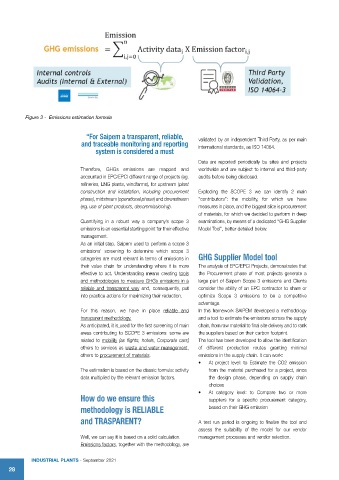
Figure 3 -  Emissions estimation formula


                               “For Saipem a transparent, reliable,    validated by an independent Third Party, as per main
                              and traceable monitoring and reporting   international standards, as ISO 14064.
                                   system is considered a must

                                                                       Data are reported periodically bu sites and projects
                             Therefore, GHGs emissions are mapped and   worldwide and are subject to internal and third-party
                             accounted in EPC/EPCI different range of projects (eg.   audits before being disclosed.
                             refineries, LNG plants, windfarms), for upstream (plant
                             construction and installation, including procurement   Exploding the SCOPE 3 we can identify 2 main
                             phase), midstream (operational phase) and downstream   “contributors”: the mobility, for which we have
                             (eg. use of plant products, decommissioning).  measures in place, and the biggest slice is procurement
                                                                       of materials, for which we decided to perform in deep
                             Quantifying in a robust way a company’s scope 3   examinations, by means of a dedicated “GHG Supplier
                             emissions is an essential starting point for their effective   Model Tool”, better detailed below.
                             management.
                             As an initial step, Saipem used to perform a scope 3
                             emissions’ screening to determine which scope 3
                             categories are most relevant in terms of emissions in  GHG Supplier Model tool

                             their value chain for understanding where it is more   The analysis of EPC/EPCI Projects, demonstrates that
                             effective  to act. Understanding  means  creating  tools   the Procurement phase of most projects generate a
                             and methodologies to measure GHGs emissions in a   large part of Saipem Scope 3 emissions and Clients
                             reliable  and transparent  way and,  consequently, put   consider the ability of an EPC contractor to share or
                             into practice actions for maximizing their reduction.  optimize Scope 3 emissions to be a competitive
                                                                       advantage.
                             For this reason, we have in place  reliable and   In this framework SAIPEM developed a methodology
                             transparent methodology.                  and a tool to estimate the emissions across the supply
                             As anticipated, it is used for the first screening of main   chain, from raw material to final site delivery and to rank
                             areas contributing to SCOPE 3 emissions: some are   the suppliers based on their carbon footprint.
                             related to mobility  [as flights, hotels, Corporate cars]   The tool has been developed to allow the identification
                             others to services as waste and water management,   of different production routes granting minimal
                             others to procurement of materials.       emissions in the supply chain. It can work:
                                                                       •   At project level: to Estimate the CO2 emission
                             The estimation is based on the classic formula: activity   from the material purchased for a project, since
                             data multiplied by the relevant emission factors.  the design phase, depending on supply chain
                                                                          choices
                                                                       •   At  category  level:  to  Compare  two  or  more
                             How do we ensure this                        suppliers for a specific procurement category,

                             methodology is RELIABLE                      based on their GHG emission
                             and TRASPARENT?                           A  test  run  period  is ongoing to  finalize  the  tool  and

                                                                       assess the suitability of the model for our vendor
                             Well, we can say it is based on a solid calculation.   management processes and vendor selection.
                             Emissions factors, together with the methodology, are

            IndustrIal Plants - September 2021
    28

