


Page 24 - 77
P. 24
FuTurE MobIlITy


         12
                                                                      transit ridership.
                   Lithium (Li)                                       However, these negative impacts can be mitigated
         10        Nickel (Ni)                                        if low-cost mobility services are introduced alongsi-
                   Manganese (Mn)                                     de policies such as “first/last mile” policies (using
                                                                      AVs to transport riders to and from public transit
        Market value (billion $)  6  NMC111 scenario                  nership. The findings apply even to cities with vastly
                   Cobalt (Co)
          8
                                                                      stations) or policies that reduce private vehicle ow-
                   NMC811 scenario
                                                                      different levels of public transit service.
                                                                      Building on the research started under the Mobility
                                                                      of the Future study, MITEI has now launched a new
          4
                                                                      Low-Carbon Energy Center, the Mobility Systems
                                                                      Center. Approaching mobility from a sociotechnical
          2                                                           perspective, the Center identifies key challenges,
                                                                      investigates current and potential future trends,
                                                                      and analyzes the societal and environmental im-
          0                                                           pacts of emerging solutions for global passenger
            2020                     2025                      2030
                                                                      and freight mobility.
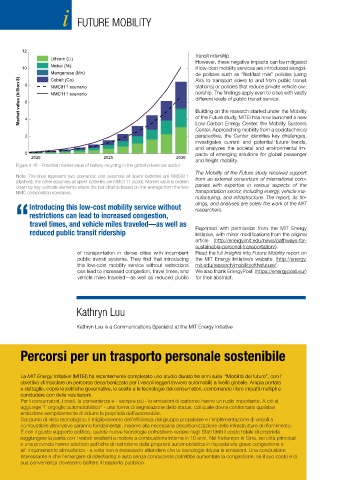
       Figure 4.16 - Potential market value of battery recycling in the global private car sector
                                                                      The Mobility of the Future study received support
       Note: The lines represent two scenarios: one assumes all spent batteries are NMC811   from an external consortium of international com-
       (dashed), the other assumes all spent batteries are NMC111 (solid). Market value is broken
       down by key cathode elements where the bar chart is based on the average from the two   panies  with  expertise  in  various aspects  of the
       NMC composition scenarios.                                     transportation sector, including energy, vehicle ma-
                                                                      nufacturing, and infrastructure. The report, its fin-
           Introducing this low-cost mobility service without         dings, and analyses are solely the work of the MIT
                                                                      researchers.
           restrictions can lead to increased congestion,
      “travel times, and vehicle miles traveled—as well as            Reprinted with permission from the MIT Energy
           reduced public transit ridership                           Initiative, with minor modifications from the original
                                                                      article (http://energy.mit.edu/news/pathways-for-
                                                                      sustainable-personal-transportation/).
                            of transportation in dense cities with incumbent   Read the full Insights into Future Mobility report on
                            public transit systems. They find that introducing   the MIT Energy Initiative’s website. (http://energy.
                            this low-cost mobility service without restrictions   mit.edu/research/mobilityofthefuture/.
                            can lead to increased congestion, travel times, and   We also thank EnergyPost  (https://energypost.eu/)
                            vehicle miles traveled—as well as reduced public   for their abstract.


                            Kathryn luu


                            Kathryn Luu is a Communications Specialist at the MIT Energy Initiative


        Percorsi per un trasporto personale sostenibile


        La MIT Energy Initiative (MITEI) ha recentemente completato uno studio durato tre anni sulla  “Mobilità del futuro”, con l’
        obiettivo di tracciare un percorso decarbonizzato per i veicoli leggeri (ovvero automobili) a livello globale. Ampia portata
        e dettaglio, copre le politiche governative, le scelte e le tecnologie dei consumatori, combinando i loro impatti multipli e
        concludere con delle valutazioni.
        Per i consumatori, i costi, la convenienza e - sempre più - le emissioni di carbonio hanno un ruolo importante. A ciò si
        aggiunge “l’ orgoglio automobilistico” - una forma di segnalazione dello status, col quale dovrà confrontarsi qualsiasi
        ambizione semplicemente di ridurre la proprietà dell’automobile.
        Dal punto di vista tecnologico, il miglioramento dell’efficienza del gruppo propulsore e l’implementazione di veicoli a
        combustibile alternativo saranno fondamentali, insieme alla necessaria decarbonizzazione delle infrastrutture di rifornimento.
        E con il giusto supporto politico, queste nuove tecnologie potrebbero vedere negli Stati Uniti il costo totale di proprietà
        raggiungere la parità con i veicoli esistenti a motore a combustione interna in 10 anni. Nel frattempo in Cina, sei città principali
        e una provincia hanno adottato politiche di restrizione della proprietà automobilistica in risposta alla grave congestione e
        all’ inquinamento atmosferico - a volte non è necessario attendere che la tecnologia riduca le emissioni. Una conclusione
        interessante è che l’emergere di ridesharing e auto senza conducente potrebbe aumentare la congestione, se il suo costo e la
       20 20 sua convenienza dovessero battere il trasporto pubblico.
           Impiantistica Italiana - Gennaio-Febbraio 2020

