


Page 36 - Impiantistica italiana
P. 36
ENERGY TRANSITION


                                                                      plexity on the Steam Turbine selection. The steam
                                                                      turbine  with controlled  steam extraction  shall  be
                                                                      equipped with additional components with the re-
                                                                      levant increase of costs, weight and limits the ope-
                                                                      rating envelope. It is possible to simplify the system
                                                                      considering a bleed from the steam turbine, but this
                                                                      is acceptable only when the CCGT plus process
                                                                      heating are operated with minimal load variation.
                                                                      When then Process heat demand is low compa-
                                                                      red with the electric power demand, Baker Hughes
                                                                      studied the possibility to extract the heat directly
                                                                      from the Recovery System combining the Steam
                                                                      Generator Coils with a Waste Heat Recovery sec-
                                                                      tion. With this solution, the CCGT can be designed
                                                                      independently from the process heating require-
                                                                      ments. The heat process requirements will be sati-
                                                                      sfi ed by the heat recovery section.

                                                                      By-pass Stack
                                                                      The need for a bypass stack, that could be integral
                                                                      or not, is a decision that may be related to the spe-
                                                                      cifi c design. The adoption of an OTSG gives the
                                                                      possibility not to install the bypass stack, because
                                                                      it can be operated in dry run, as it will be discussed
                                                                      in next chapter.

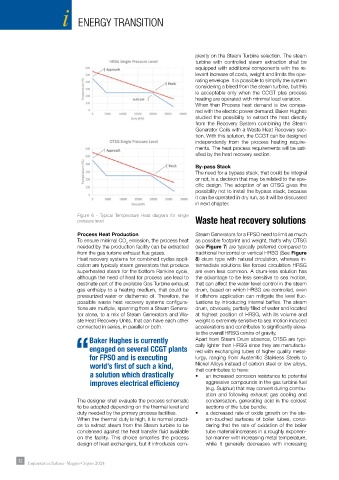
                            Figure 6 - Typical Temperature Heat diagram for single
                            pressure level                            Waste heat recovery solutions

                            Process Heat Production                   Steam Generators for a FPSO need to limit as much
                            To ensure minimal CO  emission, the process heat   as possible footprint and weight, that’s why OTSG
                                             2
                            needed by the production facility can be extracted   (see Figure 7) are typically preferred compared to
                            from the gas turbine exhaust fl ue gases.   traditional horizontal or vertical HRSG (See Figure
                            Heat recovery systems for combined cycles appli-  8) drum type with natural circulation, whereas in-
                            cation are typically steam generators that produce   termediate solutions like forced circulation HRSG
                            superheated steam for the bottom Rankine cycle,   are even less common. A drum-less solution has
                            although the need of heat for process use lead to   the advantage to be less sensitive to sea motion,
                            destinate part of the available Gas Turbine exhaust   that can affect the water level control in the steam
                            gas enthalpy to a heating medium, that could be   drum, based on which HRSG are controlled, even
                            pressurized water or diathermic oil. Therefore, the   if  offshore  application  can  mitigate  the  level  fl uc-
                            possible waste heat recovery systems confi gura-  tuations by introducing internal baffl es. The steam
                            tions are multiple, spanning from a Steam Genera-  drum, obviously, partially fi lled of water and located
                            tor alone, to a mix of Steam Generators and Wa-  at highest position of HRSG, with its volume and
                            ste Heat Recovery Units, that can have each other   weight is extremely sensitive to sea motion induced
                            connected in series, in parallel or both.  accelerations and contributes to signifi cantly eleva-
                                                                      te the overall HRSG centre of gravity.
                                Baker Hughes is currently             Apart from Steam Drum absence, OTSG are typi-
                                engaged on several CCGT plants        cally lighter than HRSG since they are manufactu-
                                                                      red with exchanging tubes of higher quality metal-
                           “for FPSO and is executing                 lurgy, ranging from Austenitic Stainless Steels to

                                 world’s first of such a kind,        Nickel Alloys instead of carbon steel or low alloys,
                                                                      that contributes to have:
                                 a solution which drastically         •   an increased corrosion resistance to potential
                                 improves electrical efficiency          aggressive compounds in the gas turbine fuel

                                                                         (e.g. Sulphur) that may convert during combu-
                                                                         stion and following exhaust gas cooling and
                            The designer shall evaluate the process schematic   condensation, generating acid in the coldest
                            to be adopted depending on the thermal level and   sections of the tube bundle;
                            duty needed by the primary process facilities.  •   a decreased rate of oxide growth on the ste-
                            When the thermal duty is high, it is normal practi-  am-touched surfaces of boiler tubes, consi-
                            ce to extract steam from the Steam turbine to be   dering that the rate of oxidation of the boiler
                            condensed against the heat transfer fl uid available   tube material increases in a roughly exponen-
                            on the facility. This choice simplifi es the process   tial manner with increasing metal temperature,
                            design of heat exchangers, but it introduces com-  while  it  generally  decreases  with  increasing


       32  Impiantistica Italiana - Maggio-Giugno 2024

