


Page 37 - Impiantistica italiana
P. 37
chromium content;                            100% sealing efficiency is provided with
            •   For coil bundle sections at highest temperatu-  air sealing fans 2x100%;
                res, like superheater section (even if in OTSG   •   Faster start-up with reduced water inven-
                there is not a physical separation among each   tory level: OTSG tube bundle usually does
                section) oxide layers that grow above about   not need to be filled of water, because,
                1-2  mils  (25-50 µm)  in  thickness  for  auste-  during start-up, the first water entering
                nitic steels typically used in boilers, have a   hot coils is suddenly vaporized, so contri-
                tendency to delaminate, and to blister and/or   buting, with the controlled vent/steam by-
                exfoliate. The impacts on heat transfer and on   pass, to progressively raise-up pressure
                the integrity of the system can be dramatic,   and temperature till to the set levels. This
                exposure to rapid temperature changes is a   reduces the start-up time and the size
                key factor in causing exfoliation of the oxide   and weight of Demi water tank, typically
                [7]; this is the reason why for this critical high   located in the hull of FPSO.
                temperature sections Ni-Alloys metallurgy is
                selected, since they enable a more stable oxi-  Another further advantage of OTSG is in exchan-
                de layer formation than Austenitic steels;  ging tubes arrangement: differently from Drum-
            •   excellent mechanical properties even at high   type HRSG where the tubes are vertical, because
                temperatures (approximately up to 600°C) as-  of the natural circulation needs to be established
                sured by the high Nickel-Chromium content of   by steam-water mixed
                these Alloys, without suffering of detrimental   phase density gradient   Baker Hughes developed several
                phenomena (like creep) and so achieving dry-  in the tubes, OTSG coils
                run operation capabilities; this possibility leads   are horizontally arran-  improvements which can help
                to a series of advantages:            ged instead, so they can “find the proper trade-off in
                •   By-pass stack may not be more required,   be  crossed  by exhaust   performances and flexibility
                   OTSG may operate in dry-run: weight   gas in a vertical pattern,
                   and footprint impacts can still be reduced   from bottom to top, so   while reducing weight, footprint,
                   compared to  traditional HRSG.  In some   allowing to locate the   CAPEX and OPEX
                   cases, by-pass duct is still installed, to   Equipment  vertically,
                   improve OTSG operational flexibility, sin-  upon the GT Exhaust di-
                   ce Equipment regulation can be done   scharge plenum. This ar-
                   both  on  water  flowrate  and  on  exhaust   rangement improves the CCGT module layout, so
                   gases. In configuration without by-pass,   that the outlet stack typical of HRSG is limited in
                   also diverter damper is not needed, with   OTSG to few meters of exhaust outlet duct length,
                   the advantage of less weight, costs, and   as necessary to ensure a good dispersion.
                   higher reliability, with less moving  parts   As cons of OTSG adoption, it should be mentio-
                   applied. Usually, diverter damper to insure   ned the impossibility to remove water impurities or


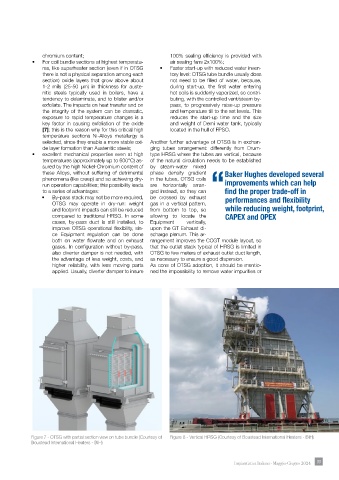
            Figure 7 - OTSG with partial section view on tube bundle (Courtesy of   Figure 8 - Vertical HRSG (Courtesy of Boustead International Heaters - BIH)
            Boustead International Heaters - BIH)


                                                                                   Impiantistica Italiana - Maggio-Giugno 2024  33

