


Page 47 - Impiantistica industriale
P. 47
and final regenerator position was 65 meters.
                The large gap between the crane and fi-
                nal  lifting  positions  along  with  the  increased
                equipment weight required a new 3,000 tons
                load capacity crane selection versus the usual
                1,350 tons crane.
                The turnaround optimisation process brought
                to the pre-assembly of the new isolation valve
                with top and bottom spools of new flue gas
                line in the replaced section.
                The configuration of the isolation valve and flue
                gas line spools required the system preassem-
                bly to use a temporary steel support structure.
                The available area for the module preassem-
                bly was approximately 90 meters from the final
                isolation valve position in the FCC unit. The
                availability of the 3,000 tons crane selected for
                the FCC regenerator lifting became an oppor-
                tunity for the lifting of the preassembled isola-
                tion valve from the module area to the instal-
                lation position.
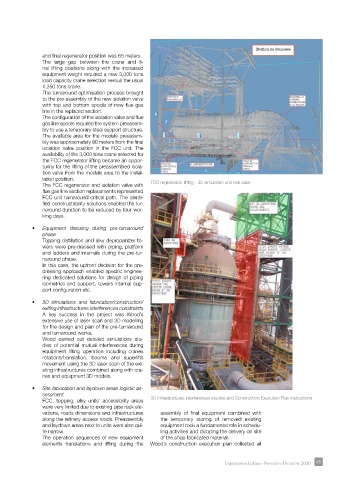
                The FCC regenerator and isolation valve with   FCC regenerator lifting - 3D simulation and real case
                flue gas line section replacements represented
                FCC unit turnaround critical path. The identi-
                fied constructability solutions enabled the tur-
                naround duration to be reduced by four wor-
                king days.
            •   Equipment  dressing  during  pre-turnaround
                phase
                Topping distillation and alky depropanizer to-
                wers were pre-dressed with piping, platform
                and ladders and internals during the pre-tur-
                naround phase.
                In this case, the upfront decision for the pre-
                dressing approach enabled specific enginee-
                ring dedicated solutions  for design of piping
                isometrics and support, towers internal sup-
                port configuration etc.

            •   3D  simulations  and  fabrication/construction/
                exiting infrastructures interferences constraints
                A key success in the project was Wood’s
                extensive use of laser scan and 3D modelling
                for the design and plan of the pre-turnaround
                and turnaround works.
                Wood carried out detailed simulations stu-
                dies of potential mutual interferences during
                equipment lifting operation including cranes
                rotations/translation,  booms and superlifts
                movement using the 3D laser scan of the exi-
                sting infrastructures combined along with cra-
                nes and equipment 3D models.
            •   Site fabrication and laydown areas logistic as-
                sessment
                FCC, topping, alky units’ accessibility areas   3D infrastructures interferences studies and Construction Execution Plan instructions
                were very limited due to existing pipe rack ele-
                vations, roads dimensions and infrastructures   assembly of final equipment combined with
                along the refinery access roads. Preassembly   the temporary storing of removed existing
                and laydown areas next to units were also qui-  equipment took a fundamental role in schedu-
                te narrow.                               ling activities and dictating the delivery on site
                The operation sequences of new equipment   of the shop fabricated material.
                elements translations and lifting during the   Wood’s construction execution plan collected all


                                                                                Impiantistica Italiana - Novembre-Dicembre 2020  45 45

