


Page 32 - Impiantistica Italiana
P. 32
GOVERNANCE


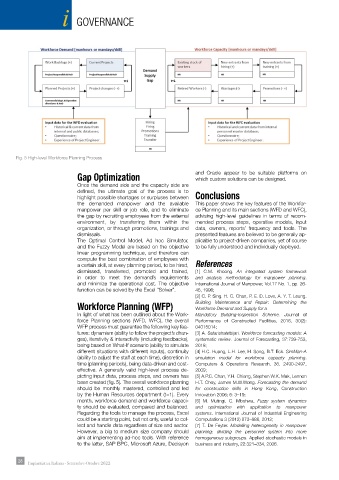
       Fig. 5 High-level Workforce Planning Process


                            Gap Optimization                          and Oracle appear to be suitable platforms on
                                                                      which custom solutions can be designed.
                            Once the demand side and the capacity side are
                            defi ned, the ultimate goal of the process is to
                            highlight possible shortages or surpluses between  Conclusions
                            the demanded manpower and the available   This paper shows the key features of the Workfor-
                            manpower  per skill or job role, and to eliminate   ce Planning and its main sections (WFD and WFC),
                            the gap by recruiting employees from the external   advising  high-level  guidelines  in  terms  of  recom-
                            environment, by transferring them within the   mended process steps, operative models, input
                            organization, or through promotions, trainings and   data, owners, reports’ frequency and tools. The
                            dismissals.                               presented features are believed to be generally ap-
                            The Optimal Control Model, Ad hoc Simulator,   plicable to project-driven companies, yet of course
                            and the Fuzzy Model are based on the objective   to be fully understood and individually deployed.
                            linear programming technique, and therefore can
                            compute the best combination of employees with
                            a certain skill, at every planning period, to be hired,  References
                            dismissed,  transferred,  promoted  and  trained,   [1]  C.M.  Khoong.  An  integrated  system  framework
                            in order to meet the demand’s requirements   and analysis methodology for manpower planning.
                            and  minimize  the  operational  cost.  The  objective   International Journal of Manpower, Vol.17 No. 1, pp. 26-
                            function can be solved by the Excel “Solver”.   46, 1996;
                                                                      [2] C. P. Sing. H. C. Chan, P. E. D. Love, A. Y. T. Leung.
                            Workforce Planning (WFP)                  Building Maintenance and Repair: Determining the
                                                                      Workforce Demand and Supply for a
                            In light of what has been outlined about the Work-  Mandatory Building-Inspection Scheme. Journal of
                            force Planning sections (WFD, WFC), the overall   Performance of Constructed Facilities, 2016, 30(2):
                            WFP process must guarantee the following key fea-  04015014;
                            tures: dynamism (ability to follow the project’s chan-  [3] A. Safarishahrbijari. Workforce forecasting models: A
                            ges), iterativity & interactivity (including feedbacks),   systematic review. Journal of Forecasting, 37:739-753,
                            being based on What-If scenario (ability to simulate   2018;
                            different situations with different inputs), continuity   [4] H.C. Huang, L.H. Lee, H. Song, B.T. Eck. SimMan-A
                            (ability to adjust the staff at each time), discretion in   simulation model for workforce capacity planning.
                            time (planning periods), being data-driven and cost-  Computers & Operations Research, 36, 2490-2497,
                            effective. A generally valid high-level process de-  2009;
                            picting input data, process steps, and owners has   [5] A.P.C. Chan, Y.H. Chiang, Stephen W.K. Mak, Lennon
                            been created (fi g. 5). The overall workforce planning   H.T. Choy, James M.W.Wong. Forecasting the demand
                            should be monthly mastered, controlled and led   for construction skills in Hong Kong, Construction
                            by the Human Resources department (t=1). Every   Innovation 2006; 6: 3–19;
                            month, workforce demand and workforce capaci-  [6] M. Mutingi, C. Mbohwa.  Fuzzy system dynamics
                            ty should be evaluated, compared and balanced.   and optimization with application to manpower
                            Regarding the tools to manage the process, Excel   systems. International Journal  of Industrial  Engineering
                            could be a starting point, but not only, useful to col-  Computations 3 (2012) 873–886, 2012;
                            lect and handle data regardless of size and sector.   [7] T. De Feyter.  Modelling heterogeneity in manpower
                            However, a big to medium size company should   planning: dividing the personnel system into more
                            aim at implementing ad-hoc tools. With reference   homogeneous subgroups. Applied stochastic models in
                            to the latter, SAP BPC, Microsoft Azure, Decisyon   business and industry, 22:321–334, 2006.


       28  Impiantistica Italiana - Settembre-Ottobre 2022

